


The Dollar Keeps Surviving. That Doesn’t Mean the System Can.

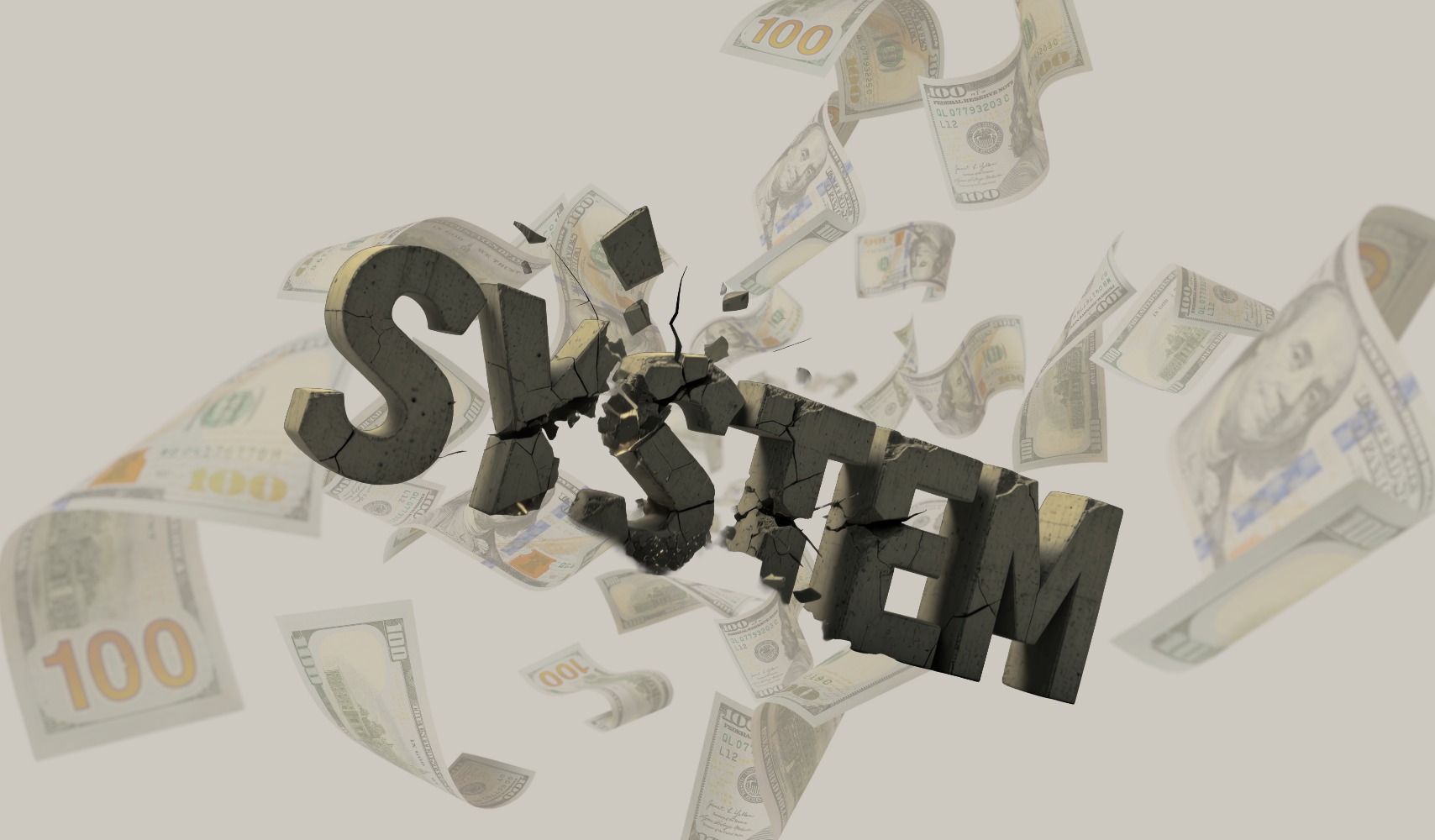
The US dollar has been “about to collapse” for most of the past half-century. And yet, each time the prediction returns, the dollar endures. Now again many pundits are musing about the dollar as the Middle East war reveals many vulnerabilities. But the dollar goes on.
It survives trade wars, financial crises, political dysfunction, and repeated claims that rival currencies are ready to replace it. Not because the dollar is uniquely well managed, or because the United States is especially disciplined, but because the system it anchors still has no credible substitute.
Yet survival is not the same as sustainability.
The more pressing question is not whether the dollar will suddenly lose its central role, but whether a system designed for continuous expansion can remain stable on a planet with physical limits. That question is rarely asked in debates about money. But it increasingly explains why the global economy feels brittle, even when it appears resilient.
More Than a Currency
While the U.S. dollar is usually described as the world’s dominant currency, in practice, it functions as something closer to global infrastructure.
It sits at the center of an interconnected system that includes trade invoicing, sovereign debt markets, cross-border banking, commodity pricing, and crisis liquidity provision. The dollar is embedded in the plumbing of the global economy, which is why replacing it has proven so difficult. You can introduce alternative currencies, payment channels, or bilateral settlement arrangements, but recreating an entire system—at global scale, with deep liquidity and legal credibility—is another matter entirely.
The system works not because it is flawless, but because it is predictable. When that predictability erodes, even actions that appear narrowly political can ripple outward in unexpected ways.
The current war in Iran has exposed the whole world to a vulnerability they have wanted to ignore. The U.S. dollar and fossil fuels are two sides of the same system, and both are needed for global growth. The U.S. runs deficits, and the oil producing countries buy U.S. bonds. This process is now being interrupted, but rising oil prices and reduction in oil supply are unlikely to bring an end to the system.
How Growth Is Baked into the System
At the core of the dollar system is a simple but consequential mechanism: how dollars are created, and why more of them are always required.
U.S. dollars are created primarily through government spending and withdrawn through taxation. When the U.S. government runs deficits, it increases the stock of dollars held by households, firms, and foreign actors; when it runs surpluses, it reduces that stock.
For the system to remain stable, the supply of dollars must grow. Profits in the non-government sector cannot rise in aggregate unless additional dollars are available. Bank lending expands the money supply, but this channel is cyclical and fragile, and therefore government deficits provide the only reliable source of net dollar creation.
This dynamic does not stop at U.S. borders.
Because the United States sits at the centre of the global financial system, dollar growth underwrites global growth as well. U.S. trade deficits supply the world with dollars, and those dollars return as foreign purchases of U.S. government debt and other dollar-denominated assets—which function simultaneously as savings, reserves, and collateral.
In this way, U.S. government debt plays a dual role. While domestically it supports growth by supplying the dollars required for profits and investment, internationally, it provides the expanding stock of safe assets the global system depends on.
The result is a system that is not merely compatible with growth, but actually dependent on it. In other words, dollar-centered global economy requires a continuously expanding pool of dollar assets to remain liquid, profitable, and stable.
This is the system’s hidden assumption: that growth will continue.
Political Stress and System Fragility
Because the dollar system depends on voluntary participation, it is sensitive to political interference.
Using access to the U.S. market as leverage in trade disputes may serve short-term objectives, but it functions as a stress test at the system level. When participation becomes conditional on political alignment, exporters and governments begin to reassess the risks of dependence.
Pressure on central bank independence creates similar strain. Interest rates are not merely domestic policy tools; they are signals to global holders of dollar assets. When rates are forced downward for political reasons, the message is clear: the returns on your dollar holdings are being reduced by design.
Even partial moves matter. Cutting interest rates in half is effectively telling global investors that half of their dollar holdings now earn nothing. While none of this signals imminent collapse, it does signal growing fragility.
The Wrong Constraint
Most debates about money assume that the limits to economic growth are financial: inflation, debt levels, employment. However, modern monetary theory and related frameworks have clarified that governments issuing their own currency are not financially constrained in the way households are. In this view, the real limits are inflation and real resource availability.
But this framing still stops too soon. The most binding constraint on the global economy is not monetary, it is physical: no economic growth is possible without an increase in energy.
Growth means more activity, more production, transport, computation, and construction. However, no increase in activity occurs without additional energy input. Money coordinates effort, but it does not power it.
The dollar system has functioned as well as it has because, for more than a century, abundant and concentrated energy made continuous expansion possible. That condition is now changing.
What is rarely asked is whether the physical world can continue to supply the growth this system requires.
Energy and the Real Ceiling
There is no immediate geological shortage of fossil fuels—countries such as Saudi Arabia and Canada still possess vast reserves capable of supporting further growth. However, using them at scale triggers another constraint: greenhouse gas accumulation.
The issue is not emissions as such, but their function: greenhouse gases trap heat that would otherwise dissipate into space, disrupting the planet’s thermal balance. This is a physical limit, not a moral one.
Nuclear power avoids greenhouse gases but introduces another systems issue: waste heat. At small scales this is manageable, whereas at civilizational scale it becomes consequential because net energy in the form of heat is still being added to the Earth system.
Wind, solar, and hydro differ fundamentally. They recycle energy already moving through the earth system—sunlight, atmospheric motion, the water cycle. That makes them compatible with long-term stability, but they are not unlimited. Intermittency, land use, materials, and grid complexity impose real constraints.
The implication is uncomfortable but unavoidable: there is a ceiling to safe energy throughput, and therefore a ceiling to economic growth as currently defined.
Overshoot and Redesign
Any system that grows beyond its carrying capacity faces only two possible outcomes: it can deliberately contract back within limits, or it can degrade the carrying capacity itself until collapse enforces contraction.
This applies to ecosystems, civilizations, and financial systems alike.
The global dollar system is not exempt: inflation, debt stress, and geopolitical tension are symptoms of a deeper mismatch between a growth-dependent monetary system and a finite energy envelope.
This is why the energy transition cannot be treated as a simple substitution problem. Replacing fossil fuels with clean energy while preserving the same throughput assumptions merely postpones instability.
Stability requires redesign.
Demonstration, Not Declaration
Large complex systems rarely change because they are criticized; they change because workable alternatives appear.
People tend to follow the path of least resistance: they will not move toward sacrifice, but they will move toward visible, functional, and attractive alternatives. That means demonstrating—not arguing—that modern lives can be lived with far less energy: highly efficient buildings, resilient local food systems, material sufficiency, and stronger community life.
These are not moral appeals. They are prototypes.
The role of the dollar in the global system will not end with a dramatic announcement or a sudden replacement. It will evolve—or strain—in response to the physical realities beneath it.
The future will not be argued into existence.
It will be demonstrated.
©David Patterson, 2026

Reach Out
We love talking about what we do and how it can make a difference to you.