


Living in a Passive House: The Week Ottawa Tried to Freeze Us (and Lost)

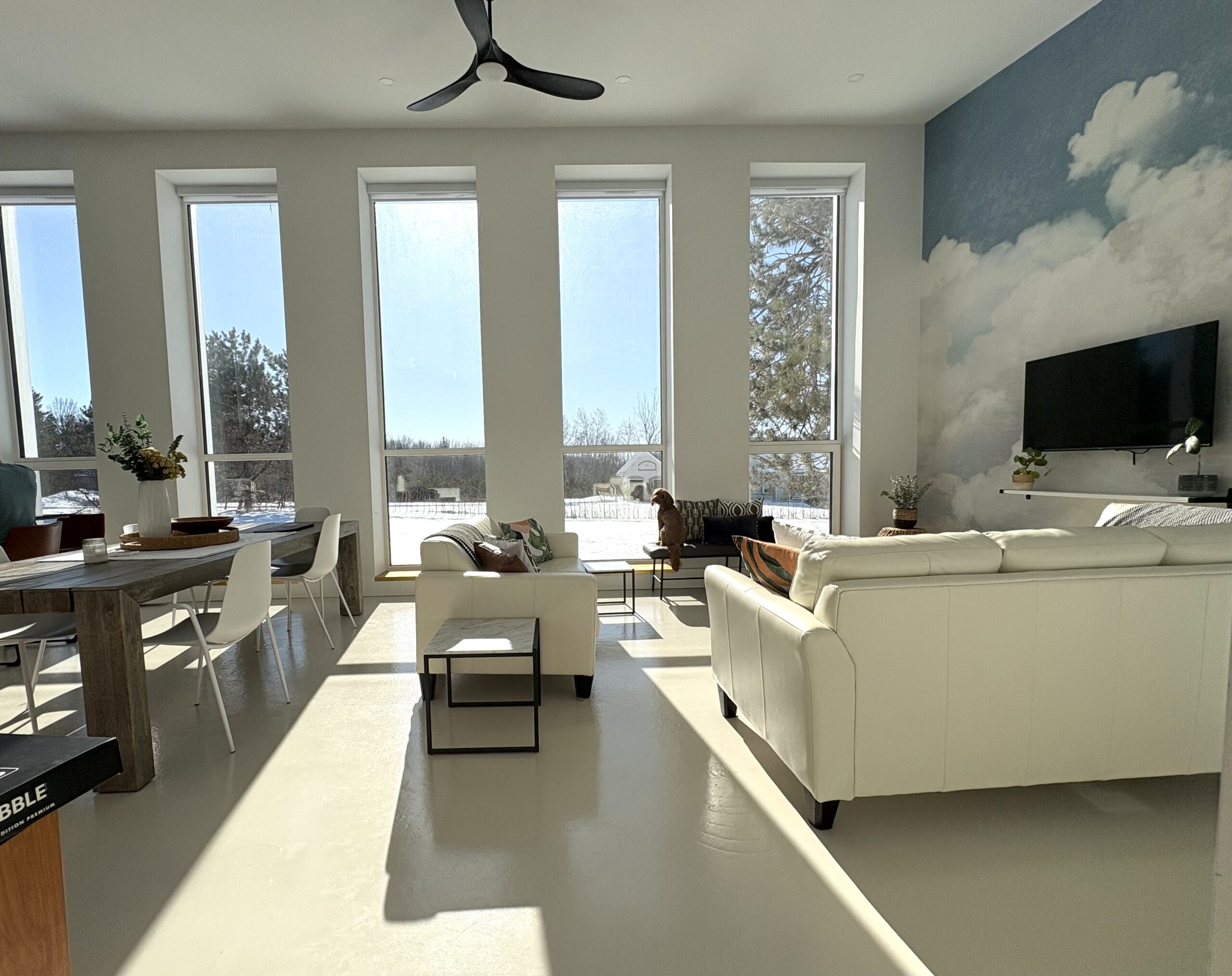
Several times this week, I looked around my house and thought, Wait… how is this even possible?
Ottawa (Ontario, Canada) has been in a proper deep freeze – six straight days of -20°C to -30°C. The kind of cold where your face hurts in under a minute and the dog doesn’t want to go for a walk. Outside there’s a sharp breeze and everything is crunchy.
Inside? We’ve been walking around in shorts and t-shirts. I’m not exaggerating. In almost a week of that kind of weather, we’ve only had our heat pump on for about three hours total. And yet the indoor temperature has stayed comfortably above 20°C the whole time. On sunny afternoons, it sometimes climbs to 26°C, which is wild when you remember what’s happening outside.
So… what’s going on?
Let me introduce you to the concept behind all of this: Passive House.
A Passive House (or Passivhaus) isn’t a style of home, it’s a performance standard. The idea is simple but powerful: instead of constantly generating heat (or cool) to fight the outdoors, you design the home to need very little energy in the first place. Think of it like building a house that acts like a thermos. Once it’s warm, it stays warm. Once it’s cool, it stays cool. You don’t have to keep feeding it energy all day long just to maintain comfort.
The reason it works comes down to the building envelope – basically, the house’s ability to hold onto comfort. Passive Houses use thick, high-performance insulation in the walls, roof, and foundation, and they’re built to be extremely airtight, which means fewer drafts and far less heat loss. Add high-performance windows (often triple-pane) and smart orientation, including south-facing glazing (when possible) that can capture winter sun, and the house can actually take advantage of free energy from sunlight and from everyday living.
And here’s what I feel as a person living in it: stability, comfort, well-being. The comfort is consistent, with no cold corners or mystery drafts.
Another surprise for me has been the natural light. Before I lived here, I relied on a sunlamp to help manage the winter slump and those seasonal affective symptoms that can creep in when the days get short. But in this house, even on cloudy winter days, it still feels bright inside. The large windows and the way the space is designed to pull daylight deep into the home make a bigger difference than I expected. And it’s not just nice light – it genuinely shifts how the day feels. The brightness lifts my mood, boosts my energy, and makes winter days feel a lot less gloomy.
The cozy factor is great, but the bigger win is what’s happening behind the scenes from an energy and carbon perspective. First, it reduces energy demand at the source. Most conventional buildings lose heat through leaky construction, under-insulated walls, and average windows, so they have to constantly burn (usually carbon-producing) energy to keep up. Passive House flips that equation. Instead of relying on big mechanical systems to compensate for losses, the building itself does the heavy lifting. It works like a thermos in every season: it holds onto heat in winter and resists heat gain in summer. The result is steady comfort – minimal heating when it’s bitterly cold, and minimal cooling when it’s hot outside.
That reduced demand is also what makes Passive House such a strong climate solution. When a home needs far less energy to begin with, it becomes much easier to run it efficiently using electric systems like heat pumps and it is a practical path toward carbon-free living. With Passive House, ultra-efficiency is the foundation.
Another sustainability benefit is durability and resilience. Because Passive Houses are airtight, deeply insulated, and designed with careful moisture management, they tend to last longer and perform better through extreme weather, while reducing the risk of condensation issues that can lead to mold (and all the health problems that can come with it). In our home, the indoor humidity stays consistently around 42–45% – right in the healthy range – without a humidifier, which is almost unheard of in a Canadian winter. That translates into fewer dry throats and itchy skin, less sinus irritation, better sleep, and a steadier sense of comfort overall. Add continuous fresh-air ventilation with heat recovery, and you get a reliable supply of filtered fresh air without the usual energy penalty.
And I have to mention the part that makes my bank account happy: our heating and cooling energy bill is about 10% of what you’d expect in a typical home. Lower bills are obviously nice, but what I notice more is the freedom that comes with lower energy dependence. Less exposure to price volatility, less waste, and more resilience.
I’m sharing this with the Common Earth community because living in a Passive House has made sustainability feel less abstract and more like something you can actually experience in your comfort, your energy bill, your health, and your day-to-day sense of well-being. Through smarter design we can use far less energy, create healthier indoor environments, and make net-zero, low-carbon living genuinely achievable – even in a Canadian winter.
For me, this week was the perfect reminder that sustainability doesn’t have to feel like sacrifice. It can feel like warmth, light, calm, and resilience. When we reduce energy demand at the source through better design, we make it easier to electrify, cut carbon, and build communities that are healthier and more future-ready. This is an example of the kind of practical systems shift Common Earth exists to accelerate – one that supports human well-being while helping us live more in harmony with nature.
______
This article was written in February, 2026, from Ottawa.

Reach Out
We love talking about what we do and how it can make a difference to you.