


Nine Ways Systems Thinking Changed How I See the World

1 – We can recognize our agency with just a simple shift in perspective.

Barry Richmond had an important insight in his paper, “The Thinking in Systems Thinking” . He calls it “system-as-cause thinking.” That is a little obtuse to me. He goes on to say a little more clearly that
“The only hope we have of improving a system’s performance is to focus our efforts on things we can control or guard against. Therefore, it makes sense to include only those relationships within our models of the system.”
This is a radical statement. How often do we rant about things that are happening and we blame someone else such as a politician, bureaucrat, friend, another driver, or teacher. We usually frame it as due to someone or something outside of us. Then Richmond comes along and says we should ask, “how are we doing it to ourselves?” If we can’t answer that question, there is no reason to model the behavior of the system.
Note Richmond is not saying we should reduce our efforts to work on only those things that are within our immediate control. The reverse happens. Take a big issue you care about and want to change and then model the issue with yourself as an active player in the system.
Let me give you a little example from an author who I have an immense respect for, but who sometimes gets tripped up on this point. Jeremy Lent, in his new book, Ecocivilization, talks about how scientists believe this about global average temperature this century “a minimum two-degree rise is already locked in by the inaction of the world’s leaders.” When I read those words – that the two-degree rise is due to “the inaction of the world’s leaders” I immediately think of Richmond. Lent is not drawing the boundaries of the system with himself as an agent within the system. We all do this. We point at someone else as being the cause of a problem. But that reflex in all of us disempowers us. What would it look like for each of us to say I am the solution to the climate crisis. That sounds impossible but if we stand outside the system we can’t be agents of change. Agency is personal.
So, to follow Richmond we must put ourselves in the system that we are out to change. We must draw the boundary of the system to include both ourselves and the problem or impediment. It is the hardest thing to do but it is critically important for the serious changemaker to develop this perceptual habit. With that habit I can exercise my agency, and it gives me resilience. And for the record, I am picking on one sentence in Lent but with his writing he is doing a lot to solve the Climate Crisis.
2 – Understanding the human thought system also leads us to see our agency.

When we realize that all our upset about any issue comes from our thinking, we immediately see that our ability to change our thought gives us the ability to change our experience of the world around us. And we don’t even have to work at changing our thoughts. There is a built-in mechanism in each of us that is like buoyancy in water. Our thinking clears as soon as we let it alone.
Most of us regularly mistake our thinking for reality and so we react to our thoughts. When we are engaged with another person, we forget that they have their own thoughts that are almost certainly not same as our own. So, they have different reactions but if we watch carefully, we will see that they have the same buoyancy that we have. A few minutes or hours or days later they will have a totally different set of reactions. Recognizing this built-in buoyancy in ourselves and in those around us is the second perspective that helps us see our agency. We don’t have to be crushed by events or the reactions of others. We can never lose our agency. Just sometimes our thoughts convince us we are a victim. Our understanding of the thought system in humans can keep us from believing our thoughts.
3 – It is important to look past events to the feedback loops behind them.

We know from systems thinking that systems are structured with flows and accumulations that are structured in loops. Some of those loops are reinforcing what is already going on and some of the loops are balancing or pushing against the direction of change. We often get caught up in events and think those are what is important. The stock market went up or down. This party or that party won the election. Wars come or go. New technologies arise creating change. Our favourite team won the series, or it didn’t. The ice-shelf fell into the sea and melted or it didn’t. Events grab our attention but behind events are structures of feedback that promote or prevent change. If we look for those structures of feedback that might have been dominating for years or decades we will have greater insight into what is really going on and what to do about it.
4 – Volatility in a variable is almost always the result of delays in feedback loops.

Sometimes the delays are the result of decision makers taking time to respond to a change. Barry Richmond once demonstrated this phenomenon by making a video of him climbing in a shower and turning the tap to hot because the water was too cold and then doing the reverse when the hot water finally came and was too hot. In cases like the shower temperature, we learn to not overreact knowing the water takes time to warm or cool after we turn the tap. But in lots of other cases, we over respond to a signal. A retailer runs out of the sweaters of a favourite team that is on a winning streak, so he doubles his next order. When the team stops winning, he is stuck with excess inventory.
So, understanding delays in systems helps us adjust our decision making appropriately just like we learn to moderate our adjusting the temperature of our shower. When dramatic events grab our attention the question to ask is has the underlying structure of feedback loops changed. If not, the events are just noise.
5 – Complex behavior of a system often results from simple feedback loops being repeated with tiny changes in initial conditions.

It was, Edward Lorenz, an American mathematician and meterologist who founded modern chaos theory, and who first brought us the expression that the flap of a butterfly’s wing in China can cause a tornado in Texas. That image of the butterfly’s wing shows how sensitive a system can be to its initial conditions or inputs. We live in a complex world and any model with hundreds of multiplications can become useless beyond short periods of time.
So, we need to have a good deal of humility when it comes to our predictions in this complex world.
6 – The next insight leans almost in the opposite direction as the last. In most systems at any given time a small number of variables dominate the direction of the outcome.

Jay Forrester, the founder of the Systems Dynamics Group at MIT, said in the videos of his PhD seminars that the people involved in a system often intuitively understand correctly which variable is the key to the behavior of the system they are working in. And then he adds that they then go about pushing it in the exact opposite direction from the needed direction. At a global level this exact insight can be seen in the way in which almost every country is trying to increase GDP growth while it is exactly that variable that is intensifying the climate crisis.
So, it is more important to model the dominant loops of a system than to add multiple variables. My own rule of thumb is that no more than five variables should tell us 90 percent of the story.
7 – There are situations where we can clearly see the system will flip from one dominant variable to another.
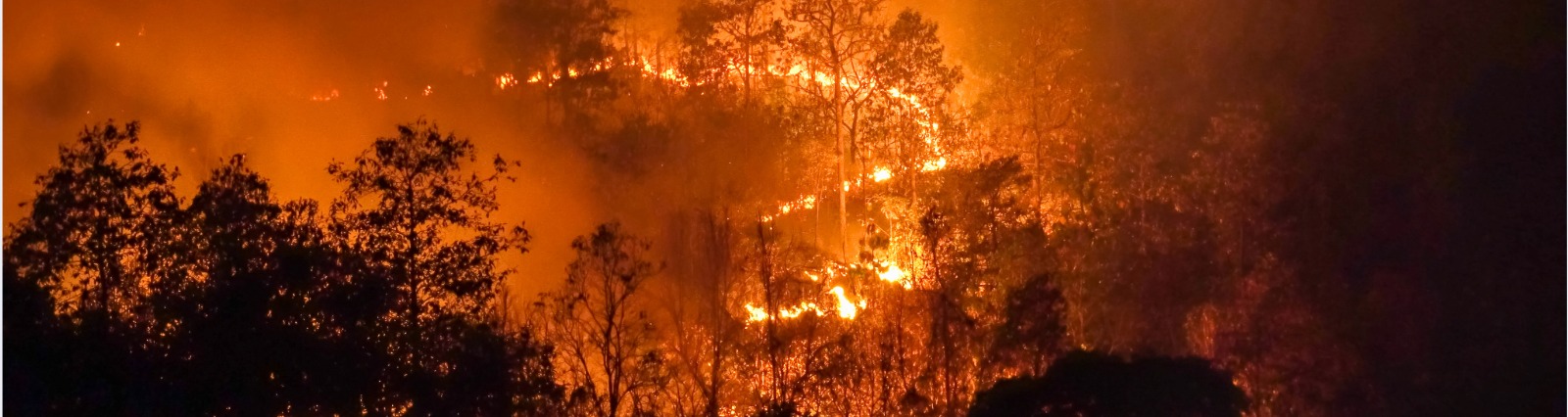
In these situations, you can be 100% certain a change will happen while being totally unclear when it will happen. For example, we know the climate is heating due to fossil fuel use and that our exponential GDP growth requires exponential energy increases. Because of dozens of feedback loops such as the melting of the permafrost in the arctic that increases the methane in the atmosphere the climate change will bring an end to our form of civilization focused on GDP growth. We are racing towards a cliff, and we can be certain that no country or person will be happy with winning the race. So, looking at a few dominant variables allows us to be 100% certain this phase of history will end but it is not clear how or when.
I live in Toronto, Canada a relatively northern country. A few days ago, at 4:30 in the afternoon, the temperature was 36 degrees Celsius. When humidity was added in it felt like 46 C. I went out and sat in the sun and found I was unable to stay in the heat for more than 10 minutes. After that day Toronto’s air was a heavy yellow for three days because of the smoke from hundreds of forest fires burning in Northern Ontario. Again, it is impossible to be outside. We can be certain that the increase in these conditions will at some point end the system creating them. It is not clear when.
8 – We know that good teaching is just a matter of pointing.

At Common Earth we are involved in teaching about the climate crisis and at the same time teaching about agency and resilience. But the implications of our insights can’t be transferred to others through telling. Each person must have their own insight so all we can do is point in the direction that we see change coming and leave it to others to either see it or not. This is not a matter of giving up, it is simply an understanding that we each have our own thoughts. It is the way the human mind works.
9 – New questions may be the greatest gift of Systems Thinking.

- Instead of asking who is to blame it is helpful to ask with Richmond where do I have agency in this system.
- Instead of asking why I feel so down or helpless or angry, ask where is my buoyancy and then point others to their own gift of buoyancy.
- Instead of asking what events are most important today, ask what are the feedback loops that are operating in this situation and have they changed.
- Instead of reacting to wild volatility ask is now a time for a moderate response.
- Instead of assuming we have the answers ask where do we see the result of multiple iterations leaving us with only humility in the face of complexity.
- Instead of assuming we know which way to push a dominant variable in a system ask do I have the direction right.
- When the current society ignores what is 100% certain don’t suppress your knowledge to fit the society’s view but ask where can I be of service to the world that will come after the change.
- And when you want to teach, just ask how do I point at reality with my words and actions.
©David Patterson, 2026

Reach Out
We love talking about what we do and how it can make a difference to you.